
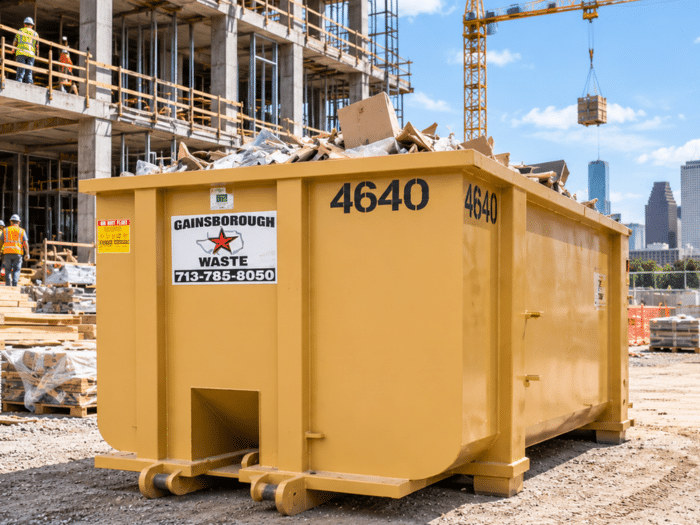
On an active construction site, debris management affects more than appearance. Full containers, blocked access, poorly timed swaps, and scattered demolition waste can interfere with crews, equipment movement, staging areas, and inspections.
A roll off dumpster for construction debris gives your team a defined place to collect material while work is underway. The value comes from planning the container around the job instead of treating waste removal as an afterthought.
For Houston construction managers and superintendents, that means thinking through dumpster sizes, placement, haul timing, materials, and project phases before debris starts piling up.
Match Dumpster Size to the Work
Construction projects do not produce the same amount or type of debris from one phase to the next. A tenant build-out has different needs from a major demolition project, roadway job, or industrial turnaround.
We offer 15-, 20-, 30-, and 40-yard roll-off dumpster service for construction and other project needs throughout Greater Houston.
The right size depends on the scope of work, available space, expected debris volume, material type, and how often the container will need service. A smaller container may fit a constrained site or lower-volume phase. Larger construction dumpsters may make more sense when your project is generating substantial volumes of construction and demolition debris.
Choosing too little capacity can mean more frequent swaps or hauls. Choosing more capacity than the site can comfortably accommodate may create placement or access problems. We can help you think through both debris volume and jobsite conditions before the container is delivered.
Plan Placement Around Site Access
Dumpster placement should support the construction site rather than compete with it.
Your team is already managing deliveries, heavy equipment, subcontractors, material staging, temporary access routes, and inspection activity. A roll-off placed without considering those movements can become another obstacle.
Before delivery, identify an area that allows crews to use the container without blocking traffic patterns or active work zones. Driver access matters too because our truck needs enough room to deliver, swap, relocate, or remove the container safely and practically.
Project conditions change. Our roll-off service includes placement coordination, ongoing servicing, swaps, hauls, and relocation as site needs develop.
That flexibility is especially useful on multi-phase projects where staging areas and access routes change as the work progresses.
Schedule Service Before the Container Becomes a Problem
A full roll-off can quickly turn into a site-control issue.
Once a container can no longer be used efficiently, crews may begin placing material beside it or looking for another temporary location. That can add clutter and interfere with normal site movement.
You can reduce that risk by connecting dumpster service to the work schedule. Demolition, framing, roofing, interior work, and closeout can produce very different debris volumes. Service frequency should reflect the phase of the job rather than follow a fixed assumption.
Our documented performance rate shows 98% same-day service for roll-off deliveries and swaps. That figure reflects our company performance and should not be read as a guarantee for every request.
The practical goal is to keep debris moving before it begins competing with the work.
Know What Material Is Going Into the Dumpster
Construction debris can include many different materials, and some waste streams require different handling.
Standard roll-offs are not appropriate for hazardous waste, asbestos-containing material, contaminated soil, Class I or Class II non-hazardous industrial waste, liquid waste, and other prohibited or special-waste categories. Those streams require separate review and handling.
Other material questions are more situational. Weight limits, heavy debris, yard waste, mixed loads, and similar issues can affect container selection, service scope, or current acceptance requirements. It is better to discuss those details before loading begins.
Acceptance rules can change, so if you are unsure about a material, contact us before it goes into the container. We can help clarify the appropriate disposal path based on the current requirements.
Keep Waste Planning Connected to Inspections and Closeout
An inspection-ready site is easier to maintain when debris has a clear destination throughout the project.
Construction and industrial project leaders are often balancing multiple trades, access constraints, safety requirements, milestones, and inspections at the same time. Waste management should support that operating environment, not create another problem to manage.
Our construction waste planning approach is built around practical project needs such as container placement, service timing, debris flow, and changing site conditions.
That does not mean a dumpster by itself makes a site inspection-ready. Debris handling works best when it is coordinated with staging, deliveries, access, and other jobsite logistics.
A practical plan covers where the container will go, what can be loaded, when service is likely to be needed, and how those needs may change from one phase to the next.
Use a Local Waste Plan That Can Adjust With the Job
Roll off dumpster rentals work best when they are treated as part of the construction plan rather than a separate cleanup task.
We support Greater Houston projects with 15-, 20-, 30-, and 40-yard roll-offs and a Houston-based team that coordinates delivery, placement, service, swaps, and removal.
We also operate two Houston Disposal Sites for qualifying loads. That gives contractors another disposal option when self-hauling makes sense for part of the job.
If you are planning a roll off dumpster for construction debris, contact us to talk through the project scope, debris type, placement, dumpster size, weight considerations, and expected service schedule. We can help you build a waste plan around the way your job actually operates.