
When you’re running a construction project in the Greater Houston area, you already have enough safety risks to manage: heavy equipment, tight schedules, changing crews, and unpredictable weather. Construction waste safety shouldn’t be another headache.
Yet on many job sites, unmanaged debris piles, overflowing containers, and risky “DIY” disposal choices are exactly what put people in harm’s way.
One of the simplest ways to protect your crew, schedule, and compliance record is to tighten up how waste leaves the site. The solution is a reliable Dump Site. Learn how our Transfer Station at Gainsborough Waste supports the core of your waste management practices and safety plan.
Why Construction Waste Safety Is a Schedule Issue, Not Just a Checklist Item
Many construction companies think about safety in terms of PPE, equipment checks, and fall protection. But your construction and demolition debris is part of the same risk picture.
When waste collection falls behind, or your team is unsure what to do with certain materials, you start to see:
- Debris piles that block access lanes and fire routes
- Trip hazards around staging areas and work zones
- Confusion about handling hazardous substances and special waste
- Extra time spent “making do” with on-site piles instead of proper waste disposal
Those conditions don’t just increase the chance of injuries. They slow your crews, invite safety write-ups, and raise the odds that an inspector, owner, or GC questions how you’re managing the whole project.
By contrast, a clear plan for waste disposal – supported by a dependable Dump Site service – helps you reduce on-site waste, keep paths clear, and stay inspection-ready with far less oversight.
How a Houston Dump Site Supports Safer Construction Waste Practices
Gainsborough Waste operates two TECQ Type V Disposal Sites in Greater Houston that accept municipal solid waste from construction waste management streams. That footprint matters for safety in several ways:
- Shorter hauls and faster unloads mean less time your team or third-party haulers spend on the road and in long landfill lines.
- Concrete, mud-free yards reduce slip-and-fall risks when you’re unloading large amounts of waste.
- Consistent rules and clear signage remove the guesswork from what belongs in the waste stream and what requires special handling.
The result: fewer unsafe on-site waste piles, smoother daily cleanup, and less pressure to “make it work” with whatever container is open.
What You Can Safely Bring to Our Houston Dump Site
For heavy-duty projects, most of what you generate falls into the “authorized waste” category and can be brought directly to our dump site for proper disposal:
- Untreated and treated lumber
- Untreated sheetrock and other drywall
- Cardboard and packaging materials
- Clean wood and clean brush debris
- Inert fill materials such as brick, stones, soil, concrete, gravel, sand, and dirt
- Plastics like PVC, HDPE, and LLDPE
- Metals, paper, glass, and shingles
These materials make up the bulk of typical materials. Removing the waste produced at the job site helps maintain clear access, reduce on-site debris, and keep your crews focused on building rather than stepping around piles.
What Does Not Belong: Keeping Hazardous Materials Out of the Stream
Waste safety also means knowing what cannot be taken to the Dump Site. Certain items require specialized handling to protect people and the environment.
Examples of unauthorized or prohibited waste at Gainsborough Waste include:
- Pesticide containers and materials containing asbestos
- Contaminated soil, incinerator ash, and hazardous waste
- PCB waste, radioactive waste, and unknown chemicals
- Used or old tires, lead acid batteries, used oil, and oil filters
- Liquid wastes, septic tank pumping, grease or grit trap wastes
- Special waste from health-care facilities or wastewater treatment plants
- Tanks, drums, or containers used for storing hazardous materials
- Paint cans, fluorescent light bulbs, and ballasts
These are the types of hazardous materials that need different handling and disposal routes. Putting them into a regular construction waste container or bringing them to an unauthorized waste facility creates safety risks for your crew and the broader community.
If your project involves any of these items – or if you’re unsure how to classify a material – call us at 713-785-8050. We’ll walk you through your options so you can stay compliant without guessing.
Dump Site + Roll-off Dumpsters: A Safer System for Your Whole Waste Stream
A safe site isn’t just about where your waste ends up – it’s also about how it moves from the work area to the final disposal point.
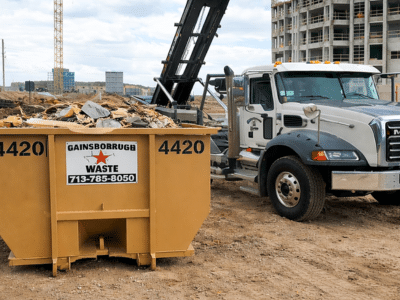
That’s where pairing our Houston Dump Site with roll-off dumpster rentals makes a real difference. Roll-offs give you a controlled, contained way to collect that debris on-site and keep it out of the way of your crews.
Together, the Dump Site and construction dumpsters create a simple, safer system for your whole waste stream. With Gainsborough Waste, you can:
- Use right-sized roll-off dumpsters on-site: crews load debris into properly placed containers instead of building unsafe piles.
- Rely on our 98% same-day roll-off service: full dumpsters are swapped out quickly and waste is routed promptly to our Transfer Stations.
- Keep your jobsite cleaner and more predictable: keep access lanes open, make clean-up easier to maintain, and avoid last-minute runs or improvised disposal plans.
- Work faster around Houston’s major corridors: route loads to our conveniently located locations so your drivers spend less time in traffic and more time keeping the job moving.
For busy superintendents and project managers who are bound by the project schedule, this system can help keep each job site clean, compliant, and moving without worrying about the next haul.
Practical Tips To Improve Waste Safety on Your Next Project
Here are a few simple steps companies can take to tighten up waste management practices and protect crews:
- Define your waste stream early. During the planning stage, list the main types of waste debris you’ll generate. Note any materials that may be hazardous substances or require special handling.
- Plan dumpster sizes and placement with safety in mind. Match construction dumpster size to phase and footprint, and place roll-offs where they won’t block fire lanes, equipment paths, or emergency access. Our team can advise on this before the first dumpster arrives.
- Schedule waste collection around critical milestones. Coordinate swaps and runs to the Dump Site before big pours, inspections, and trade handoffs. That reduces last-minute scrambling and keeps your critical path clear.
- Train crews on what goes where. Make it easy for teams to separate standard construction waste from potentially hazardous materials. Post simple guidelines near dumpsters and staging areas and reinforce them in toolbox talks.
- Use a single, safety-minded partner where possible. Working with one local waste company that understands both roll-offs and disposal rules simplifies decision-making and reduces the chance of something slipping through the cracks.
Keep Your Houston Jobsite Safer With a Trusted Dump Site Partner
Construction waste safety should never be the reason a project slips – or the reason someone gets hurt.
By pairing safety-driven roll-off dumpster service with our reliable Houston dump site, you can keep your site cleaner, reduce waste on the job, and stay compliant with OSHA and environmental regulations.
If you’re planning new projects in Houston and want a waste plan that supports safety, we’re here to help. Contact us today to discuss your next project’s waste disposal needs. Let’s build a safe, efficient plan.